Happy hour and anarchy: good for the soul

I SPENT much of my day feeling depressed and frustrated over a letter from the IRS that was waiting for me when I got home yesterday following my South Texas trip. Not a big deal: not an audit or anything like that; the IRS just needs more information on my 2013 return. Unfortunately, I thought it was talking about 2014 so I wasted most of the day trying to figure out what its questions were.

So, when I got I got the email from a friend about a happy-hour gathering, I was more than elated to accept the invitation. The happy hour turned into three happy hours and they were just what I needed.

Great friends, decent margaritas, good conversation.

I was feeling good and mellow on my way home, so when I got to the intersection of Montrose and Richmond and saw the first few bicyclists of the weekly Critical Mass ride cross the intersection, I was not bothered, even though I knew that it would mean that I would have to sit at that intersection for some time, until all the cyclists went by.

Why the hell not, I kept repeating to myself. Why the hell not?

IN A CITY that treats cars and pickups as if they were gods, it felt good to see the bike people take over a major street. After my IRS afternoon, street anarchy sounded pretty damn good, and I ignored the honks and screams from the cars behind me. I just sat there and smiled as the light changed from red to green to red to green.

But when I heard an ambulance’s siren approaching from behind me, I saw an opportunity to engage in my own bit of anarchy. I knew that the bicyclists would stop for the ambulance and so I decided to follow it as it crossed the street, forcing the bicycle folks to continue waiting until I crossed the intersection.

They didn’t like it. Not one bit. They cussed at me and they shook their fists at me, as if I were breaking the most sacred of bicycling commandments.

But I didn’t care. Not one bit. I was engaging in my own bit of anarchy and it felt damn good.

I KNOW THOSE riders saw me as an evil representative of everything they hate about our car-based society, and I don’t blame them. But what kind of anarchist – a breaker of rules – are you if you complain that other people won’t obey your rules?

You’re either an anarchist or you’re not.

Posted in Uncategorized | Tagged , , , , | Leave a comment

50 years and counting: Looking back at an unremarkable high school experience

FIFTY YEARS AGO tonight I walked across a makeshift stage in the center of the dilapidated gym of my high school to receive my diploma.

When I walked out of that gymnasium, I never looked back. I never went back to visit my teachers and I never went back for a reunion. Our class never had a reunion – or maybe it did and I just wasn’t invited!

The reason I never returned had nothing to do with how I viewed my time at Crystal City High School (Hail to thee, our Alma Mater. Praise we offer thee. Something something something la-la, for ole Crystal High.) While those four years were not exactly the best of my life, neither were they the worst.

No, I stayed away simply because I believed that a high school belongs to high school students — and that there’s nothing to be gained by going back.

hsgradFollowing are some thoughts on this momentous anniversary:

RECENTLY, I CAME across in my old files a copy of the mimeographed program of that ceremony from 50 years ago. Among other things, such as class officers and faculty sponsors, it also listed the class colors (blue and white), the class song (“Maria Elena”) and the highly original and provocative class motto, “Every day gives you another chance.”

We also had a class flower, and it was the ranunculus. Really. Why would we pick the ranunculus? It’s a big mystery. I guarantee you that 99 percent of my classmates had never heard of such a flower, much less seen one.

I’VE THOUGHT a lot about my classmates over the last few weeks. There were 78 of us who got diplomas that rainy night, but there were many more who dropped out before graduating, mostly girls who married young and quit school. I know where a few of them are, but I have completely lost track of the majority of them.

Only one of my classmates is a Facebook friend. I’ve tried to do Internet searches on a few of them but I quit that after I hit a scam site that was trying to convince me my computer had been infected by a virus.

At least 13 of those of us who graduated are now dead. Three of them died in Vietnam. One of them, Juan García, was the first Crystal Citian to lose his life in that conflict and they named the town’s main park after him. He was a good, decent and intelligent person. We were not close friends, but we had a good relationship. Because he too came from a migrant worker family, he went to same elementary school for migrant kids that I attended. I think he and I were in the same class from the third grade to the eighth grade.

Another classmate died when the Air Force jet he was flying on a training mission crashed in Europe. Yet another became a deputy sheriff and was killed while on the job.

Fourteen of my classmates were Anglo. One was African American, one was Japanese American (how an Asian American ended up in Crystal City is a mystery but I would imagine that his father worked at the Del Monte cannery) — and one was half Mexican and half Anglo. The rest of us were Mexican.

The Mexican group was about evenly divided between those of us who came from migrant families – and who often entered school in late September or October, or whenever we came back from up north — and those from families who stayed in Crystal City all year and were able to start school on the first day of classes.

Almost all of us migrant kids went to two elementary schools that were called Airport 1 and Airport 2, because they were close to the town’s airport. They occupied school buildings that were part of the World War II internment camp. The others went to Grammar Elementary, with the Anglo students. Although I got along with students in both groups, and liked most of them, my heart was always with the kids I had gone to elementary school with.

There was not much socializing between members of the different ethnic groups, either on or off campus. It wouldn’t surprise me to learn that there were some romantic/sexual trysts between Mexicans and Anglos, but they certainly did not take place in the open and they were never talked about widely.

LOOKING BACK, I have to say that ours was an unremarkable class. None of us went on to become famous or (as far as I know) super rich. Probably the most successful classmate is Frances Acosta, who became a medical doctor and practices somewhere in Nebraska. She was one of the migrant kids.

ALTHOUGH THE POPULATIONS of the schools and the town were predominantly Mexican American, the Anglo establishment controlled the school district and other local governments, and the overwhelming majority of teachers and administrators were also Anglo.

There was unabashed racism and discrimination. For instance, the faculty, not the students chosen the cheerleaders and band majorettes, and every year they selected only one Mexican cheerleader and one Mexican baton twirler. While they let us select our class and student body officers, they drew the line when it came to the selection of certain school and class “favorites.” They changed the rules so that only Anglos were selected as “most beautiful” or “most handsome” or homecoming queen.

We put up with it because we didn’t know it was possible to change things. All that was to change a few years after I graduated as a result of the Raza Unida revolution that led to the Latino takeover of the schools, the city and the county.

But at the time, most of us felt helpless. We grumbled about it but none of us was sophisticated enough politically to try to lead a drive for change. One time, during either my junior or senior year, I wrote a petition demanding changes in the system and I secretly circulated it. I managed to get a good number of signatures on it until one day my history teacher, Mr. Martínez, saw me with the petition. He immediately told the principal and before the day was over I was in the principal’s office, turning over my petition.

WHAT KIND OF student was I? I was a decent student (graduated 6th in my class). I enjoyed learning, but only about things that I found interesting. That did not include biology, chemistry or physics. I enjoyed history but I was turned off by having to memorize dates and battles and names of generals, and I was even more turned off by teachers who didn’t appear to give a damn about what they were teaching. I became a political junkie very early in my life so I thoroughly enjoyed civics, as they called government classes.

I liked math and was intrigued by the challenges of algebra and the pure joy of solving a plane geometry problem. I had a great teacher for both of those subjects. Unfortunately, those challenges became overwhelming when I got into advanced math and those joys became infrequent when I moved up to solid geometry. Unlike many people who swear they cannot find any practical applications to what they learned in algebra, I still use the algebra rules taught by Mr. Ray to solve some everyday problems.

But I think my favorite classes were English, both the grammar parts and the literature segments. There too I had good and challenging teachers. Learning and applying the rules of grammar and how to spell words were tasks that never proved difficult for me.

What I liked the most about English was writing “themes,” which is what our short essays were called. I often found a way to sneak in my political views into my essays, which did not please Mrs. Lunz, especially when I criticized the Anglo power structure that ruled the school system. She could not criticize my writing skills so she often resorted to put-downs intended to let me know that I was getting too big for my britches. Her favorite was “a little learning is a dangerous thing.”

As for my relationship with my fellow students, I was neither a leader nor a follower. I was never part of a clique and I never sought to be; I was comfortable in my independence.

The only time I became part of a group was my junior year, when I hung out with Tavo and Joe, whom I’d gotten to know over the summer in a migrant camp in Wisconsin. Tavo was a mechanic, like his father, and he loved cars. I spent many an afternoon in his back yard watching as he tinkered with his ’56 Ford, or other cars. In the evenings, I would join Tavo, Joe and others as we rode around town in that Ford, or park at the Dairy Kreme while shooting the breeze. Sometimes other drivers would challenge Tavo to a drag race (or he would challenge them) and we would all go out to the countryside to watch the two cars zoom down the narrow roads. That was probably the most scandalous thing we did, for we didn’t drink and we definitely didn’t do drugs.

By the next year, however, Tavo, Joe and the others had started dating girls and the group broke up and I again retreated to the comfort of my books. I loved books, and had since I discovered that there was such a thing as a library, in junior high.

In addition to being a loner, I was also an individualist (which caused me to have a brief flirtation with Ayn Rand and Goldwaterism, but that’s another story for another time). I sought desperately to be different from all the others, but not so different that I would open myself up to ridicule or abuse.

While I was not a “cool” kid, I was not a nerd. I didn’t go around with pencil holder in my front shirt pocket or a key chain or slide rule hanging from my belt. While most of my classmates saw me as one of the smarter students and often asked me for help, I generally tried to maintain a modest attitude towards grades and intelligence. I don’t believe I ever tried to show off, but I may be exercising selective memory here.

This is not to say that I was a silent presence in my school. My classmates could always depend on me to get our civics or history teachers to set aside lesson plans to talk about current events. I liked playing that role and I thrived in the attention it got me. I have always craved people’s notice and approval, and my classmates would probably tell you that I also took pleasure in drawing attention to myself by being a smart-ass to my teachers, especially those for whom I had no respect. Like Mr. Martínez.

While I was not a popular student, I don’t believe I had any enemies, and I don’t think any of my classmates disliked me intensely.

I think that if I played a “role” of any kind in high school, it was that of “the judge,” or “the wise one.” People mistook my relative silence for wisdom. And they mistook for impartiality my reluctance to get involved in matters that did not directly affect me. Constantly, I was asked to be a mediator in schoolyard arguments or debates. “Let’s ask Juan,” they would say, and it would be up to me to decide who was right. (Actually, they would say, “Let’s ask John,” because that’s how I was known in high school.) My decisions or responses were not always correct, but my classmates seemed to trust me.

I NEVER DATED in high school. While I knew early on in my life that I was different, I didn’t really know what it all really meant. I didn’t know whether my sexual attractions would stay with me all my life or whether I would outgrow them – or suppress them. I did have feelings for several girls, although in retrospect I realize they were more emotional than sexual.

The closest I came to having a “girlfriend” was my relationship, during my junior year, with a girl several years younger. Her name was Alma. She was the younger sister of a classmate who had run off and got married the year before Alma entered high school. Their parents were so upset by the older sister’s marriage that they forbade Alma to date or to go out at all without a chaperone.

We were both in band and I guess that’s how I got to know her and became attracted to her. We saw each other during lunch break. After we ate, we’d go to the auditorium or to the library where we would sit next to each other and talk quietly. We also sat next to each other on the bus during out-of-town band trips. What we talked about, I don’t remember. All I know is that I enjoyed being with her and that she seemed to enjoy being with me.

But the next year, when school started, Alma was not there. Her family had decided to stay in Washington state, where they had been going to work in the summers. I never saw her again.

I DID NOT play sports but I was an avid fan of all high school sports, baseball in particular. I loved baseball and I went to every single home game. The highlight of every spring was the annual baseball tournament. I would always buy a ticket for the entire tournament, which entitled me to skip classes to catch the afternoon games.

I was in band. I played clarinet, then oboe and finally the tuba. The tuba was the only instrument I could play relatively well. Why the director allowed me to play the oboe, one of the band’s most important instruments, for three years, I will never be able to figure out. I got all A’s in band (everyone did). Had it not been for band, my GPA would not have been as high and I’m sure I would not have graduated sixth in my class. It took me 50 years to realize that. Wow!

IF I HAD to pick a most memorable moment of my high school years, it would have to be that early Friday afternoon in November — during my sophomore year — when I was walking down the hallway that connected the auditorium and the main hallway. Our lunch hour had ended and we were all heading back to our classes. In the middle of that hallway I saw Kathye Briscoe heading in the opposite direction, with tears in her eyes.

“They shot him,” she said.

They cancelled classes a few minutes after that.

I STILL HAVE my high school diploma, somewhere in my files. It’s never been up on a wall. Along with it is an autographed photo of Lyndon Baines Johnson. When he was a senator, he would send a letter of congratulations and a picture to every graduating senior in the state, and I guess he never could bring himself to quit once he became vice president and president. I’m surprised I didn’t throw away that photo. Although I now believe he was one of our nation’s best presidents, I back then was not a fan of LBJ. He represented the Texas Anglo establishment and everything that was wrong with the state.

I DID NOT leave Crystal City right after I finished high school. Like most of my classmates who went on to college, I enrolled in the junior college in Uvalde and commuted to school every day from my home. It wasn’t until two years later, when I entered in Southwest Texas State College (Texas State University now) that I left my hometown.

I’ve never been back for more than a few weeks at a time. And, as I said, I never returned to good ole Crystal High. Why? Because every day has given me another chance, that’s why!

Posted in Uncategorized | Tagged , , , | 4 Comments

‘They’ll be waiting for me; I’ll be there tonight’ — A final conversation with a man who was about to die

FIVE YEARS AGO today, at 6:19 p.m., the State of Texas took the life of my friend, Rogelio Reyes Cannady. Ten more days and he would have been 38 years old. He had been behind bars more than half of his life.

I got to know Rogelio because of a column I wrote for USA TODAY in 1998, about being Mexican. Rogelio read it and wrote to his Swiss pen pal, Isabelle, that he liked it. She took it upon herself to contact me to encourage me to communicate with him. I resisted for months, but I eventually relented and wrote my first letter to him some time in 1999. He responded not long after that. We continued exchanging letters, averaging at least one a week, until he died. In fact the last two letters I got from him arrived on the day he died.

Through our correspondence, we became friends and it was inevitable that sooner or later I would visit him in Livingston, where he was held after he was sentenced to death. Our first visit was in late April 2000. I had come to Houston for the get-together commemorating the 5th anniversary of the death of The Houston Post.

I was living in Washington at the time and, fortunately, my work required that I fly to Houston a lot, and that allowed me to visit him several times a year.

Rogelio always had great hopes that his conviction would be overturned and he would not be put to death. But he was a realist and he knew that his chances were slim, and so he asked once if I would be a witness to his execution and I promised him that I would.

I was not able to keep that promise for reasons that are too complicated to get into here. Those same reasons prevented me from visiting Rogelio the last year of his life. I felt bad about it but he understood. We continued exchanging letters until the very end. Many of those letters contained posts for a blog, DeathWatchJournal, which he had asked me to start for him. He wrote them in longhand and I typed them into my computer so I could post them.

As the day of his execution approached, I walked around overwhelmed with dread, loss, guilt, and other gloomy feelings. I had written my farewell letter to him and I knew I would get a similar letter from him, but that somehow felt inadequate and I was angry at the events that conspired to keep me from speaking with him one last time.

Then, on the evening before his scheduled execution, I got a phone call that I was to call Rogelio at the Walls Unit, in Huntsville, where he was to be killed. He would be allowed to receive calls from a handful of family and friends and I was one of them.

I was at my desk when I called him and, as we began to talk, I picked up a pen and started writing down what he said – probably my old reporter instincts kicking in. I’m glad I did, because my memory is so bad that I am sure I would have forgotten most of it.

Following is what I wrote that evening, for DeathWatchJournal, about our conversation:

THIS AFTERNOON I had a 25-minute conversation with Rogelio. He was already in the Walls Unit, in Huntsville, in a room next to the execution chamber. With him was a chaplain. He was drinking sweet iced tea and had asked for a cigarette.

They had offered him some cookies from a tray nearby but he refused because he wanted to save room for his last meal: beef and cheese enchiladas, two cheeseburgers, fried chicken and strawberry cake. He hadn’t eaten all day because he wanted to be able to eat everything.

He was in amazingly good spirits, at peace, understanding that even though technically it was still possible for the courts to intervene, he will likely be dying at 6 this evening. He spoke of “three amazing days” of visits with his beloved Norma [his girlfriend] and his family. The days were divided into 10-15 minute visits with each of his siblings and Norma. Pictures of them together were taken and he promised that Norma would share them.

“It was good,” he said. “Very, very good.”

He spoke of his sister’s breaking down during one visit and his admonishing her.

“Don’t tell me not to cry,” she shot back. “I raised you and I’ll cry if I feel like it.”

He told her that it was OK, to go ahead and cry.

“She needed to get it out of her system,” he explained. “I can understand that.”

Then he added: “But I can’t do that; I don’t have the luxury.”

ABOUT HIS EXECUTION, he said: “I’ve always been a realist, so I knew this was coming. But I don’t feel any fear. I’m proud that I’m OK. I won’t allow myself the luxury of weakness. If I die, I will die with my head held high. If I have to go, it is what it is. I’m going to a better place, better than what I’ve been in all these years.”

I told him about the many wonderful comments and prayers on his blog site and he asked that I pass on his gratitude “for everyone who reached out to me, who understood, who supported me.” He added that he I appreciate their support.

“An injustice was done but I’m a big man and I have held my head high.”

He said that the last time he came close to being executed he wasn’t ready. “But I’m ready this time.”

After our call, he was planning to speak with his siblings, and with Isabelle, Tina and his attorney. And, of course, Norma.

“I don’t have any last words thought out,” he said. “Of course, I’m going to express my gratitude.” He voiced regret that “it’s going to mess with them (his loved ones who will witness the execution) bad.”

He said he’d been talking to the chaplain about the drug administered to put him to sleep before they administer the lethal injection.

“He said it is just like when they put you under for surgery,” he said. “You don’t feel a thing.” And he talked about los queridos who have gone on before him.

“They will be waiting for me,” he said. “I’ll be there tonight.”

Later, he said he is sure there is a God, “and I have to get right with God, whatever that Supreme Being is.”

His cigarette arrived, a Marlboro Lite, and he lit up. I could hear him inhaling and savoring.

“Man,” he said, laughing. “I’m smokin’ now! That’s the first cigarette I’ve had in 17 years.”

I asked how it tasted.

“Man,” he said again, and in my mind I could see that wide grin of satisfaction on his face. Then he started coughing.

“This stuff is bad for you. Cigarettes will kill you,” he said, laughing at his own joke.

He talked about the conversation he’d had with the warden when he arrived, when the official explained the procedure to him. He told the warden that when 6 o’clock came he was not going to walk into the execution chamber.

“I’m just going to lie down and they’ll have to carry me in,” he explained. “I’m not going to walk in there voluntarily. The warden said he understood.

Finally, he thanked me for my friendship and support.

“Wherever that it is that I’ll end up, I’ll be looking down on you and taking care of you. Well, maybe not down, but I’ll be looking at you, and taking care of you.”

WHEN I FOUND out last night that I could speak to him today, I was not looking forward to it. I was scared. I had heard he had been in bad shape during the first part of the week and I didn’t know what condition he would be in, and I didn’t know what condition I’d be in. But within seconds of the start of the conversation, I was at ease.

It was as if I was sitting in front of him, looking through the plate glass partition on a regular visit. I have been dreading this day for weeks, and my heart has been heavy with grief, but following our conversation, I feel as if a great weight has been lifted. I got an opportunity to say goodbye to my friend and he reassured me that he is OK.

When I got home, there were two letters from Rogelio, his last two, with several blog entries. I will post them later. I don’t have the strength to do that tonight.

I JUST HEARD that the Fifth Circuit Court had turned down Rogelio’s appeal. It is being appealed but his lawyers don’t have much hope, so in about an hour, Rogelio will be carried into that room. He’ll say his final words and he’ll be gone.

***

Following is the Associated Press account of his execution:

 “Condemned Texas inmate Rogelio Cannady was executed Wednesday evening for killing his cellmate while already serving two life sentences for a double murder.

“Cannady, 37, from Harlingen, didn’t deny fatally beating 55-year-old Leovigildo Bonal with a belt and padlock in October 1993, but he insisted the attack at the Texas Department of Criminal Justice McConnell Unit in Beeville was self defense from Bonal’s sexual advances.

“In the death chamber he smiled and nodded to his brother, a niece and three friends he selected to witness his death and told them repeatedly he loved them.

“ ‘I’m going to be OK,’ he said as they watched through a window. ‘Y’all take care of yourself … May God have mercy on my soul.’

‘As he waited for the drugs to take effect, he laughed and lifted his head from the gurney.

“ ‘I thought it was going to be harder than this,’ he said, grinning. ‘I’m going to sleep now. I can feel it. It’s affecting me.’

“Then he began snoring.

“Eight minutes later, at 6:19 p.m. CDT, he was pronounced dead.

“Cannady walked to the death chamber about 30 minutes after the U.S. Supreme Court rejected an appeal that his confession in the 1990 murders of two teenage runaways in the Rio Grande Valley was coerced, meaning Cannady should have never been imprisoned in the first place.”


Posted in Uncategorized | Tagged , , , , , , | Leave a comment

Cut back on energy use? Great idea and I’d do it — but I’m not perfect

MY LAUGH OF the day comes from a New York Times piece on “environmentalists” in the Seattle area practicing for a massive kayak flotilla event next Saturday to protest the plans by Shell Oil to lease a terminal at the Port of Seattle for its Arctic drilling fleet.

They call themselves “kayactivists” and their effort the “ShellNo Flotilla.” According to The Times, they plan to attract more than 1,000 kayaks and other small boats, not just from Seattle, but from all over the Northwest. Some people are even talking about physically blocking Shell ships.

The article had plenty of quotes from these self-proclaimed friends of the Earth about their noble ideals and the need to protect the world from Big Bad Oil.

None of those quoted said anything about taking personal steps to cut down on their use of fossil fuel or energy in general so that we don’t have to be so dependent on Big Oil. Presumably the reporter didn’t as them about that, nor about how all of them are getting to the harbor from their homes and about how much fuel they will be using to get there.

The reporter seemingly found no irony in quoting a couple of people from Portland, Oregon who are planning to make the three-hour drive to participate in the flotilla. A three-hour drive!

THAT’S THE TROUBLE with this country’s “environmentalists”: they will do anything to rail and rant against oil and natural gas drilling and against coal mining – especially if it gets them in the newspaper or on the evening news, but when it comes to actually conserving energy, well, that’s somebody else’s job.

We could dismiss this as typical Northwest nuttiness, but it’s the same all over the country. It’s not our fault that we “need” to get in our cars to drive to another part of town or across the city or state – or across the country. We have to. And who’s fault is it? Why, it’s Big Oil’s fault, of course. Big Oil is providing the energy. It’s like drug users blaming the drug producers and pushers for their habit.

Hollywood luminaries such as Mark Ruffalo, Leonardo DeCaprio, Robert Redford and others have being beatified as environmental saits because of their outspokenness for the Earth — despite the fact they fly all around the globe on their private planes.

Typical is Laurie David, ex-wife of Larry David, who is extremely outspoken about fossil fuels. Yet she admitted in 2006, in an interview with The Guardian, that she owned homes on both coasts and that she flies a private jet several times a year to get from one house to the other.

“Yes, I take a private plane on holiday a couple of times a year, and I feel horribly guilty about it. I probably shouldn’t do it. But the truth is, I’m not perfect. This is not about perfection. I don’t expect anybody else to be perfect either. That’s what hurts the environmental movement – holding people to a standard they cannot meet. That just pushes people away.”

OF COURSE, SOME, of us drive Priuses, electric cars and other energy-efficient vehicles, but we still drive. We still use energy. Even electrical energy comes from somewhere. Some of it may come from dams, the sun, or the wind — or nuclear plants — but most of our electrical energy still comes from coal and natural gas.

Not only that, many of us still get on huge fossil fuel-guzzling airplanes to distant destinations for pleasure trips and even business trips that really, when it comes down to it, do not need to be taken.

We still cool and warm our homes and work spaces whether they need to be warmed or cool. We continue to buy more and more devices that need to be plugged in or charged up. Many of those things come from Amazon and other on-line outfits that ship those products to us on energy-eating planes and trucks.

Heaven forbid that people be asked to sacrifice. Not flying on private jets to and from your various homes is certainly a standard that can be met. So are a whole slew of other standards that would cut down on our dependence on fossil fuels. Holding people up to those standards is not what hurts the environmental movement. It’s our hypocrisy.

It’s so much easier to blame the oil companies. Now they can be held to standards. It’s so much easier to demand that they stop producing all that oil and gas we use. Failing that, it’s so much easier to demand that our government force them to stop.

I SPENT SOME 14 years flacking for Big Oil, but as my friends know, I had these feelings about environmentalists way before I worked for the industry. Working for the industry only made me much more aware of the vacuous nature of their complaints.

For the record, I do believe that we are using too much fossil fuel and I do believe that there are many things that all of us, together, can do to get us away from using so much of it. And I know that, contrary to what most people believe, oil companies are spending billions and billions of dollars to research ways to provide consumers with cleaner energy.

And I believe that the goal of a cleaner Earth can be accomplished if we, all of us – the environmental movement included – were to spend more energy educating the world on the need to cut back on energy use and how to do it.

Think about it: when was the last time you saw an ad paid for by an environmental organization encouraging you to use less energy?

If the billions of dollars spent each year by the hundreds of environmental organizations on salaries and PR campaigns against the oil industry – like the one in Seattle — were instead used on a protracted and unrelenting campaign to educate us on how to be better stewards of this Earth, we could begin to finally see a real change.

Posted in Uncategorized | Tagged , , , , , , , | 3 Comments

This is what she did. This is what my mother did.

THIS IS WHAT she did:

She ate the brown bananas and other over-ripe fruits so that we didn’t have to.

She removed the nata — that film that forms on the surface of milk when you heat it, as when you make hot chocolate or atole, hot cereal — and ate it so it didn’t have to touch our lips and tongues, because we thought it was yucky.

She fed my father first, if he was around, then us, because we insisted that our tortillas be hot off the comal.

When we took our lunches to school, she made them for us before she made her own and went to her job.

Up north, she’d get up at 4 a.m. to start the fire in the wood-burning stove in order to make everybody’s lunch, then our breakfasts, and make sure we all had or work clothes, then she joined us in the sugar beet or cucumber or potato fields all day, then come home to cook our dinner.

She taught us early on that it’s a rough would out there and that not all fights are worth fighting — that we’d better learn to pick our battles carefully. When we got into fights with neighborhood kids, most of whom were cousins, she never stepped in to defend us, instead she would tell us that nothing would happen to us if we stayed in our own home. And if we complained about being harassed by a sibling or a cousin, she’d tell us, mejor un loco y no dos (better one lunatic than two).

THIS, ALSO, SHE did:

While my sisters were expected to iron their own clothes and help with the laundry, I always had clean and pressed clothes without having to lift a finger. In that way she did spoil me, as most Mexican mothers spoil their sons.

While she always pressured me to find an after-school job, she never failed to give me a weekly allowance, whether I worked or not. Granted, it was a very small allowance, but it was an allowance nonetheless.

She never screamed and she never spoke loudly, and her laugh was a quiet laugh, almost a chuckle. But she had a great sense of humor and loved jokes and even told jokes every now and then.

She had an odd yet an endearing habit of repeating a story — or a punchline — if it got a good reaction the first time. She repeated it within minutes of having told it the first time. My brother inherited that habit. It’s not as endearing with him. Sorry, Jando.

AND SHE DID this:

She taught me how to make calavacita and how to make chorizo.

She would have taught me how to make tortillas if I had asked her. I’m sorry I didn’t.

She spent a lot of time during the last half of her life waving good-bye to her children and their families, from her front yard, as they drove off. She never cried until they were several blocks away.

She loved “I Love Lucy” even though she knew almost no English. ¿Porque llora esa vieja? she would ask whenever Lucy started crying.

Likewise, when I played my Aretha Franklin records, she would demand, ¿Porque grita esa vieja?”

She died before I was able to bring classical music into her home, but I have no doubt she would have loved it and she would have loved the hell out of the fact that as I write this, I am listening to the finale of Tchaikovsky’s Fifth Symphony.

She loved watching boxing matches on TV but hated wrestling, yet she sat there and watched it quietly (usually while sewing quilts or knitting) because my father loved wrestling.

She taught my father how to read and write. I’m sure she regretted that many times, but she never said so.

Even though her English was limited, she made sure to correct me when I came home from the second grade one day and told her that the English word for cebolla is “cunion.”

Her own mother died when my mother was very young and she acquired her first real mother when she married and her mother-in-law welcomed her with open arms. Because of that, she swore that no daughter-in-law of hers would ever be made to feel like a stranger in her home. None ever did.

AND THESE ARE among the things she did:

One day, in North Dakota, my brother Norberto was with Tío Adrián under Tío’s heavy Pontiac, trying to fix something when the jack failed and the car came crashing down on them. It was a Sunday and my mother was doing the laundry in front of our house. As soon as she saw the car drop, she rushed over, bent down and pulled the car high enough so that the two men could crawl out. She did that.

She made my sisters’ dresses, when Tía Benita couldn’t. She made at least three or four quilts for each of her eight children and at least one for her 27 grandchildren. Once I asked her to make a quilt for the child of a couple I was friends with, and she did. She made that quilt.

She made the best tamales in the world, the best tortillas in the world, the best enchiladas in the world, the best tacos in the world and the best hamburgers in the world.

SHE MADE MANY other things.

Somebody convinced her once, as she was nearing retirement age, that she would get better retirement benefits if she were a U.S. citizen and that she could become an American citizen by taking the citizenship test in Spanish. She studied like crazy and learned all about George Washington and the Constitution and the Civil War. Then she was told that because of her age, the test had to be in English. She never became an U.S. citizen, and this nation missed out on a great opportunity.

She survived by showing up. When told that the local Del Monte cannery would not be needing her services on a particular day, she’d show up at the beginning of a shift anyway, just in case someone didn’t show up and they needed an extra hand. Showing up worked often.

Her husband was abusive. There is no other way to put it. Yet, when he died, she wept.

She loved all her grandchildren, but there was a special place in her heart for Norbie and Norma, my dead brother’s two children. The other grandchildren understand that.

She loved roses. She loved all kinds of flowers, but roses gave her great delight. She had a rose bush in the front yard of our old house that bloomed like crazy. I made it my mission to cut off the dead roses so that new ones would grow, and she loved that. When Urban Renewal tore down our house and ran a road through our property, she insisted we dig up that bush and transplant it in our new yard. It never thrived there.

She was a devout Catholic and she loved when I would come home from college and go to Mass with her. But when I became a non-believer and I told her I would not be going to church (I didn’t tell her why, I just said I wasn’t going), she understood. She never insisted; she never harangued. She understood.

When I was in my early 20s, she talked often about the kind of woman I should marry. By my late 20s and early 30s, she never spoke about that. She understood. We nevmomflordecalavazas44er talked about it, but she understood.
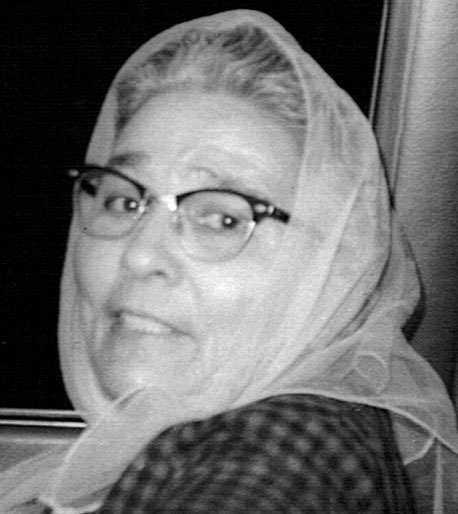
Every New Year’s Eve, she remarked, Quién sabe si este será me ultimo año. On New Years Eve, 1990, she didn’t say that. She couldn’t. She was lying in her bed, unable to move or talk. She probably thought it, though. The next day, she died.

That’s what she did.

That’s what my mother did during her 84 years on this Earth. I hope you have these kinds of memories of your mother. If you’re a mother, I hope your kids remember you as fondly.

Happy Mothers Day.

Posted in Uncategorized | Tagged , | 7 Comments

A brief — very brief — visit to a pleasant past

THERE SEEMS TO be a lot of home repair work being done in my neighborhood this week, and I’ve become accustomed to the sounds of construction. Hammers banging against wood. Electric saws grinding through planks. Drills boring through two-by-fours. The shouts of construction crews as they communicate their needs, accomplishments or humor to their fellow workers.

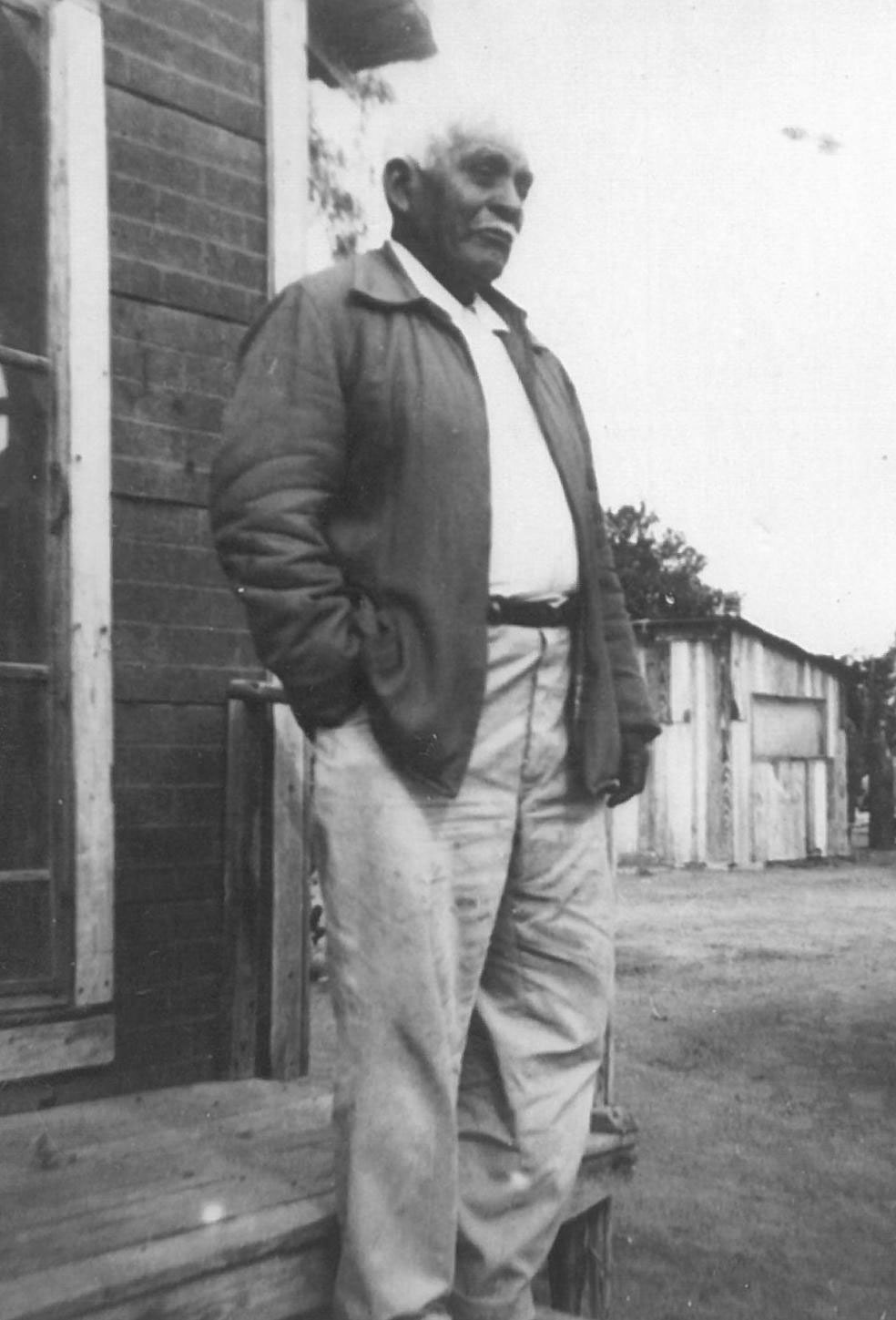
They are pleasant sounds. I’ve always liked the sounds of people building things, mending things, reinforcing things. Maybe it’s because they remind me of my grandfather, Alejandro Palomo, who was a carpenter.

Alejandro Palomo

Alejandro Palomo

He built his home and the home of each of his four children – Benita, Gertrudis, Domingo and Adrián – who made it to adulthood (many others didn’t), and he spent the rest of his life taking care of what he had built, until he died of a heart attack in 1957 while picking prunes in an orchard near San José, California. He was 83.

A strong and stubborn man, he had little trouble hauling heavy ladders and other equipment to and from his job sites. He would often be seen carrying two-by-fours and other lumber from the lumberyard downtown to our neighborhood – about a mile away.

As a child, I was often recruited to be his assistant, especially if he was working on our house. I didn’t do any of the heavy work, but it was up to me to hand him whatever tool he needed, to carry material to him (a scary task, if he was working on a roof; I’m scared of heights!). Sometimes he would allow me to use a hammer to nail some tejas (wooden shingles) on a roof, but he had little patience with me when I hit my thumb or fingers or, worse, bent a nail or damaged a shingle. I spent a lot of time straightening nails for him, with a hammer, so he could reuse them. I hated that job.

BUT THIS POST is not about my grandfather. Believe it or not, it’s about tortillas. A while ago, after I finished reading the newspaper, I decided that taking a nap might help me feel a bit better. I’ve been suffering from the effects of a long and brutal cold and I still go through periods of feeling just plain yucky.

So I lay down and dozed off. Sometime later (not too long, for my naps rarely last longer than 15 minutes), I moved into that strange sleep stage where you’re not exactly awake but you are aware of the smells and sounds around you, and your senses send you briefly into your past.

It’s happened to me many times. Perhaps the most memorable time was one early morning while I was in a hotel room in downtown San José, Costa Rica. It was around 6:30, my normal waking hour. I could hear the sound of metal grinding against metal, like the sound a porch swing makes as it moves back and forth. And so I thought I was on a porch swing. And I could even feel the gentle rocking of the swing. A pleasant sound and a pleasant feeling that ended abruptly with a sudden jolt that jerked me awake: an earthquake! My first ever.

ANYWAY, THIS MORNING, as I began to emerge from my nap, I pictured myself lying, as I often did as a kid, on the cool linoleum kitchen floor of my childhood home, as my mother made her tortillas somewhere in the shadowy edges of my dream. I could hear the distinct and steady cadence of her palote as it made contact with the tabla and began to roll under her steady hand, flattening out the masa into the rounded shape of a tortilla.

Martina Palomo

Martina Palomo

Clump, it went. The sound of wood meeting wood. Clump. Clump. Clump.

It lasted for just a few seconds before I awoke and realized that the sound came from the construction crew across the street and I was not too far from downtown Houston, not in the kitchen of a small Southwest Texas town.

Rather than feeling sad, as I probably would have in earlier years, I lay there filled with a great sense of joy at having spent those few seconds back in that simpler, more comforting space and time.

If there was any regret, it was that I didn’t get to take in the aroma of the masa as it transformed into a tortilla on the hot comal.

Posted in Uncategorized | Tagged , , , , , , , , , , | 1 Comment

Nickels and dimes versus nation and world

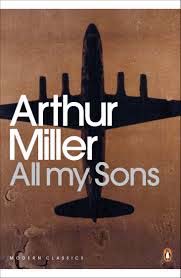
IT’S BEEN A couple of weeks now since I saw the Alley Theatre’s excellent production of Arthur Miller’s All My Sons, yet it seems that hardly a day goes by without my thinking of the play, and of certain scenes and lines in particular.

The play is set in Ohio right after World War II. It is about businessman, Joe Keller, who had knowingly supplied the U.S. Army Air Force with defective parts, causing the death of many service members. He somehow is able to talk his way out of jail and returns home to run his company.

As time passes, Keller and his wife, Kate, become convinced that Joe was indeed innocent, and when, inevitably they are forced to admit that the plane parts were defective, they find ways to justify his actions.

It was about protecting the business, they tell themselves. And to their son, Chris, who served in the war, they say that it was about protecting the family.allmysons

He’s not the only one who acted selfishly during the war, Joe insists: other industries and other businesses did the same.

“It’s dollars and cents, nickels and dimes,” he says. “War and peace, it’s nickels and dimes.”

And when Joe and Kate are forced to look at that they are saying, they find ways of coping.

“I ignore what I gotta ignore,” Joe says.

Of course, the web of deception and delusion collapses in a key dramatic scene toward the end, and Chris demands to know why Joe did what he did and asks:

“God in heaven, what kind of man are you?”

Joe again explains that he did it, “for you, a business for you!”

But Chris has had enough and he angrily replies:

“For me! Where do you live, where have you come from? For me! – I was dying every day and you were killing my boys and you did it for me? What the hell do you think I was thinking of, the Goddam business? Is that as far as your mind can see, the business? … Don’t you have a country? Don’t you live in the world?”

THOSE ARE EXCELLENT questions, ones that we should all ask ourselves as we go about making decisions in our everyday lives.

What kind of people are we?

Are we part of this world, and if we are, will the actions I take today – or the actions of those whom I support and abet — make our world better or worse? Similarly, are we part of this country and are we contributing, through our actions, through the causes we support, to making our country better or worse?

Is our love for “nickels and dimes” so overwhelming that we ignore – because we gotta — the harm that our actions are inflicting on our society?

I wonder if the people who run this country, the executives of the largest companies and their largest shareholders, ever ask themselves questions such as these. Is there ever a minute in a company’s board of directors meeting when those sitting around the table take time to ponder whether they live in this country, in this world, or whether they live strictly in the world of ever-increasing monetary gain?

Is there ever an agenda item titled, “Assessing corporate responsibility to our world and our children’s world – how does our company measure up?”

I wonder if the Koch brothers and the Sheldon Adelsons of the world ever bother to ask themselves these questions.

Is the Koch brothers’ desire to protect their rights to make as much money as they want whenever and wherever they want so strong that they are willing to ignore – because they gotta – the great harm that the tea party crazies are inflicting on our democracy?

For Adelson, is the survival of the rightwing Israeli government more important than the survival of our country, and of Israel itself?

Do they have any sense of civic responsibility? Their actions tell us they don’t. Take the Koch brothers (please!). We know they are highly intelligent, well-educated people. We know that they can’t possibly buy into the TP’ers’ anti-gay, anti-woman, anti-poor people, anti-labor rights, anti-abortion, anti-immigrant agenda. Some of it, maybe. But no one can seriously make the case that these highly intelligent and sophisticated men buy into all that crap.

Yet, there they are, the Koch brothers, funneling more and more of their money into the coffers of the TP crazies running for office on anti-gay, anti-woman, anti-poor people, anti-labor rights, anti-abortion, anti-immigrant agenda. There they are, supporting idiots like Ted Cruz and John Cornyn, who would rather see the country go down the drain than allow President Obama or the Democrats a single victory.

Why? Nickels and dimes, my friends, nickels and dimes. They ignore what the TPers are up to because they gotta, because they know that the TPers will vote –always — against any governmental action that might infringe on the right of the Koch brothers to make as much money as they want to make, regardless of the consequences to the environment, the economy or society. Always.

SO, BACK TO Miller’s questions. Do these men have a country? Do they live in this world? It doesn’t matter. They’ve got the nickels and they’ve got the dimes. Chingos and chingos of them.

Posted in Uncategorized | Tagged , , , , , , , , , | 2 Comments

My life after The Houston Post: 20 years and counting

THE HOUSTON POST was killed 20 years ago today. It is perhaps fitting that on this day many former employees of the newspaper will be gathering at a Bellaire church to pay tribute to a fellow “Post Toastie,” Fred King, who died earlier this week.

The “official” 20-year reunion will not be until August, but thanks to Fred, ever the loyal employee, at least some of us will get together on this day.

There will be a lot said and written today about The Post. There will be a lot of good memories shared, but there will also be a lot of negative words uttered, primarily when the name of former owner Dean Singleton comes up.

Twenty years later, there is still a lot of bitterness and a lot of anger about The Post’s demise and about how Singleton handled it – or orchestrated it. I don’t blame people for wanting to retain that rancor. A lot of them suffered much, emotionally and economically, and some have never recovered. You can’t tell people to “get over” such life-changing experiences. Hurt is hurt and pain is pain and no amount of Pollyanna talk is going to erase that.

I have done my share of Singleton bashing, much of which was reflected in a column I wrote for The Houston Press shortly after that fateful day. You can read it here if you want to because I’m not going to rehash it.

And today I will refrain from thinking negative thoughts about Singleton or anyone else associated with The Post’s demise.

I will instead concentrate on thinking of all the good things — and good people — that have come into my life since The Post shut its doors, things that probably would not have happened had the paper kept on publishing.

BECAUSE THE POST closed, I was forced out into the world to invent a new life for myself and I did not end up writing stale, safe, boring and recycled columns as many longtime columnists do.

BECAUSE THE POST closed, I spent close to three years in Austin writing about religion and faith for that city’s newspaper. As an atheist who grew up Catholic, this turned out to be an amazing opportunity to learn about how and why people turn their beliefs into action (or not).

The editors at the American-Statesman were kind enough and wise enough to give me lots and lots of freedom and time to explore the issues that I was curious about.

I learned to love and appreciate the Baptist tradition – not the new intolerant Baptist church, but the church that preached about the “priesthood of the believer.”

I had the joy of discovering a young evangelical preacher soon after he arrived in Austin to start a new church, and I followed him around for weeks as he set about to recruit members. That church, which attracted a handful of people at its first service, is now a strong institution with many followers.

BECAUSE THE POST closed, I was able to try my hand at freelance writing, after I left Austin, and to learn – thank God! – that freelancing is not for me.

BECAUSE THE POST closed, I was able to spend a year in San Marcos, working with an old young friend who decided to use his inheritance money to start a magazine about psychology, mythology and religion (yes, I know, that’s redundant). He is 18 years younger than I but he taught me a lot about writing and about editing. And I got to work with scholars from across the country who were grateful to have an editor who could translate their scholarly writings into readable copy.

BECAUSE THE POST closed, I wrote a monthly column for USA TODAY’s op-ed page for a couple of years. It was through that column that I was able to, finally, convince the White House to honor the late great singer Lydia Mendoza with a National Medal of Arts. (I had tried to get that done with a Houston Post column to no effect, but USA TODAY’s huge circulation made a big difference.)

BECAUSE THE POST closed, I was able to end up at my final job, as a media relations specialist for the American Petroleum Institute. Yes, I know: Big Bad Oil.

Big Oil was berry berry good to me.

It was the best job I ever had. Not only did it pay well enough to allow me to go from near bankruptcy to debt-free in a few years, it allowed me to accumulate enough savings to move back to Houston a couple of years ago to begin a life of comfortable retirement. But more than that, API challenged me intellectually and creatively. My opinion was trusted and my work and talents were valued. I also got to travel all over the country, and even made it to Bahrain and Saudi Arabia once.

But best of all, I got to work with and become friends with some of the smartest and most wonderful and supportive people I have ever known. Many are still friends and will be until I die.

SO, ON THIS DAY, I have a lot to reflect on, and a lot for which to be grateful. I won’t thank Dean Singleton for this. I’ll thank the Media Gods instead.

Posted in Uncategorized | Tagged , , , , , , | 3 Comments

The mysterious Mr. King — and why did he hate my guts?

IN MY UNENDING and thankless quest to rid my home of clutter, I came across my high school and junior high report cards. Why I’ve saved those, I have no idea.

I used to have my grade cards from junior college but I tossed them out. All but the one for my French class, which is signed by my instructor, Tomás Rivera. Yes, that Tomás Rivera, author of Y No Se Lo Trago La Tierra — the Rivera who died in 1984 at the age of 48 while serving as chancellor of the University of California-Riverside. (He gave me a B even though I scored a 92 in my final exam.)reportcard

There is nothing remarkable about my report cards (aside from the fact that I was “John” Palomo in high school!). I was a fairly good student so I made primarily A’s and B’s, with a few C’s here and there, mostly for my science classes. My worst grades were in chemistry, biology and physics. My best were in English. The only card with perfect grades was for my plane geometry in which I made perfect scores in every single assignment and every single exam. I loved the beauty and logic of plane geometry and I wished that all my classes were like that.

Well, I take that back: there was something remarkable about them: my father’s signatures were all forged. I don’t think my father ever saw any of my report cards. Aside from taking me to school on my very first day of my scholastic life, in De Zavala Elementary, telling Mrs. Tinsley (we called her mis tilinguis – my balls!) what my name was and that was the last time he ever attended any school function until I graduated 13 years later. (My first year of school was not in first grade, but rather in what was called “pre-primer,” which was designed for kids like me who spoke no English. We called it cero bola!)

My mother probably did see many of my report cards, at least in elementary and junior high schools. By the time I was in high school, however, I decided I didn’t need to bother her with signing my cards and started forging my father’s signature. Sometimes hers. I got pretty good at replicating their signatures. I think the main reason was that showing her my cards with their mostly good grades was tantamount to bragging, and if we were taught anything early on it was that we should never brag.

THERE WAS ONE report card, however, that stands out. It is my civics class in my senior year. I earned a B on my work, but when it comes to citizenship, I had C’s during the first two six-week reporting periods of the first semester and a B in the third period. In the second semester, I started up with a C, followed by a B and then, finally, an A in the final six weeks.

I am mystified as to how that happened. I was a good student, for the most part; I behaved. I never skipped classes and I always completed my assignments. In no other class in my four years of high school did I ever get anything less than an A.

On the back of the report cards there is an “explanation of citizenship.” It says that it is based “upon the student’s behavior, his attitude toward the class and his cooperation with his teachers and fellow students.”

I can’t imagine what I might have done that demonstrated to the teacher that I had a bad attitude or that I would not cooperate. Especially in civics, one of my favorite topics in high school. I loved government and I was fascinated by politics.

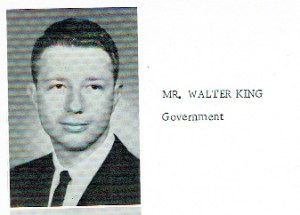
MrKingThe teacher’s name, according to the card, was Mr. King. I think I vaguely remember him. He was a youngish, fairly good-looking guy – probably a coach. I have vivid memories of all my other teachers. The excellent ones as well as the lousy ones, and can probably come up with an anecdote of each of my classes. But not about this Mr. King. Obviously, he wasn’t that important to me. I just looked him up in my yearbook and he doesn’t look at all like I thought he did. His first name was Walter.

Was that why I misbehaved? Because I didn’t respect him? I know that I tended to care more about my classes and about my grades in classes where I respected my teachers. Why would I not have respected Mr. King? And why did my citizenship grade go from C during the first six-weeks of the second semester to an A? The card shows that he initially gave me a B but then he crossed it out and replaced it with an A. Did he feel sorry for me? Or did I suddenly become a good school citizen?

 I GUESS IT all shall remain a mystery. We can call it Citizen Juan. Or The Mystery of Mr. King.

Posted in Uncategorized | Tagged , , , , , , | 1 Comment

BOOKS: Mexico and violence as seen by two different sets of eyes

I STARTED READING María Venegas’ Bullet Proof Vest: The Ballad of An Outlaw and His Daughter several months ago but about a quarter of the way through her memoir, the release of several new books that I felt compelled to read caused me to set it aside.

When I finished those other books, I almost didn’t go back to Venegas’ book. I’m glad I did. It is one of the best books I’ve read in the last couple of years. I just finished reading it and I’m sad that I won’t be able to return to it.

Venegas’ father was really an outlaw and he had many enemies, including the police and drug cartel members. The book begins with an attempt on his life and it ends with another attempt, this one successful. That he lived as long as he did is a marvel. He claimed he survived because he had a guardian angel. Most of the people in his small town in Mexico, however, believed the opposite – that he had made a pact with the devil. But he didn’t see himself as invincible; his view on death and when it arrives is simply, el que se chingó se chingó.

The veneration of mothers among Mexicans and Mexican Americans is so strong that, despite the book’s title, and despite reading several reviews, I still assumed that the story would be about Venegas’ and her siblings and their mother’s struggles to survive in the Chicago suburbs where they were living when her father abandoned them to return to Mexico. But, of course, it isn’t.

While Venegas does give us a thorough view of that difficult early life in Illinois — and later of her successes as an actor and writer in New York and elsewhere — the book, it turns out, is really about her father. It’s about the relationship they were able to establish and nourish after, as an adult, she decided to visit him in the small Mexican town where they were both born.

Her descriptions of life in that small community and of her father’s cattle ranch are told lovingly and simply. I wish she had written more about why she felt compelled to return to her father, to re-establish a relationship that seemed lost early on. While she does explain it, it doesn’t seem enough; there are still some blank spaces.

What is clear is that Venegas identifies very much with her father. She is proud that her friends had nicknamed her “Chainsaw,” because of her fearlessness and surmises that “whatever part of me was a chainsaw was fueled by” his blood.

There are few flourishes in Venegas’ writing, it’s basic English narrative language with a few Spanish words or phrases thrown in when necessary. (Most of the time she doesn’t bother to translate them into English, which is just fine because such translations are generally awkward and tend to disrupt the flow of the story.)

However, here and there you will find words meticulously patched together to create beautiful, stirring images. Here, for example, is how she described an approaching storm when she was with her father rounding up cattle at his ranch:

On the way back, the horse and the donkey move at a swifter gait, and by the time we clear San Martín, the clouds seem to be at war with one another. From the four corners of the earth … cloud formations have risen and are now merging overhead, snuffing out the last rays of sunshine. A rumble rips through the clouds above and then a bright whip cracks down against the mountains as if trying to make them gallop.

One minor nit: Venega overuses the phrase “I couldn’t help but wonder” to the point that the reader almost dreads to turn the page for fear of being confronted with another one. But, when you consider the grander treasures she offers, it is indeed a minor complaint.

IRONICALLY, ONE OF the books I read during the time I set Bulletproof Vest aside was Barefoot Dogs Stories by Antonio Ruiz-Camacho, a Mexican-born journalist who now lives in Austin.

The two books are different in so many ways (aside from the obvious one that one is fiction while the other is not), yet they are alike in that they deal with similar subjects: a Mexican patriarch and his kidnapping and death at the hands of those who have made life in Mexico so difficult in recent decades affects those he leaves behind.

Ruiz-Camacho is a beautiful, exquisite master of the English language, which is remarkable given that Spanish remains his primary language. (When he speaks, you can tell that he still struggles to find the right English words and the correct way to put them together to form a cohesive sentence.) That he managed to write so beautifully in English is a testament to his talent and tenaciousness.

The biggest difference between these two books is the perspective from which they’re told. Venega writes about the poor, illegal immigrants and about the poor communities from which they emigrated. Ruiz-Camacho writes from the point of view of the pampered wealthy elite.

Venega’s people arrived here seeking work and an opportunity to advance; Ruiz-Camacho’s settled in upper-class communities – in Berkley, West Austin, Connecticut and Madrid – and spent much of their time feeling sorry for themselves.

More important, while Venega refuses to excuse the sins of her father and assigns him his share of the blame for messing up his family and, in a larger context, his country, the patriarch in Ruiz-Camacho’s stories is never heard from.

Worse, his children and grandchildren are too absorbed in their self-pity to ever ask the question: to what extent did this man, and other men and women, members of Mexico’s elite classes, contribute to the sad situation in which Mexico finds itself?

Posted in Uncategorized | Tagged , , , , , , , , | 1 Comment